
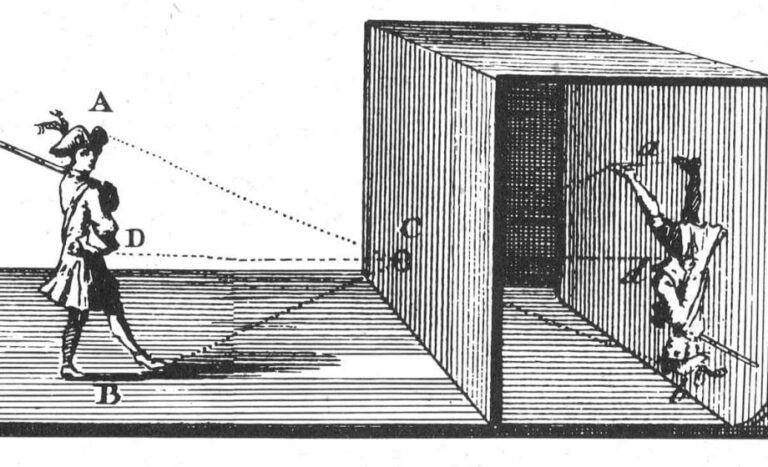
Technically this wouldn’t be considered a camera since it does not capture a picture, but it was the predecessor of the camera. The camera obscura acted more like a projector. The image that it would project would be mirrored. Although the earliest example of the camera obscura was traced back to 1550, the oldest recorded principle of the camera obscura is a description by the Han Chinese philosopher Mozi.
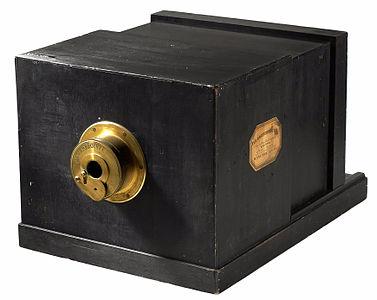
In France, Louis Daguerre succeeded in producing the first practical photographic process. A reasonably high contrast and sharp image exposed on a metal plate. The plate was covered with silver iodide and exposed to mercury paper and the image was fixed with a common salt solution.
Daguerre’s camera technology had a flaw where the pictures vanished quickly. This was corrected by American inventor Alexander S. Wolcott, who invented the mirror camera. Instead of a negative image with reversed colors, this camera created a positive impression.
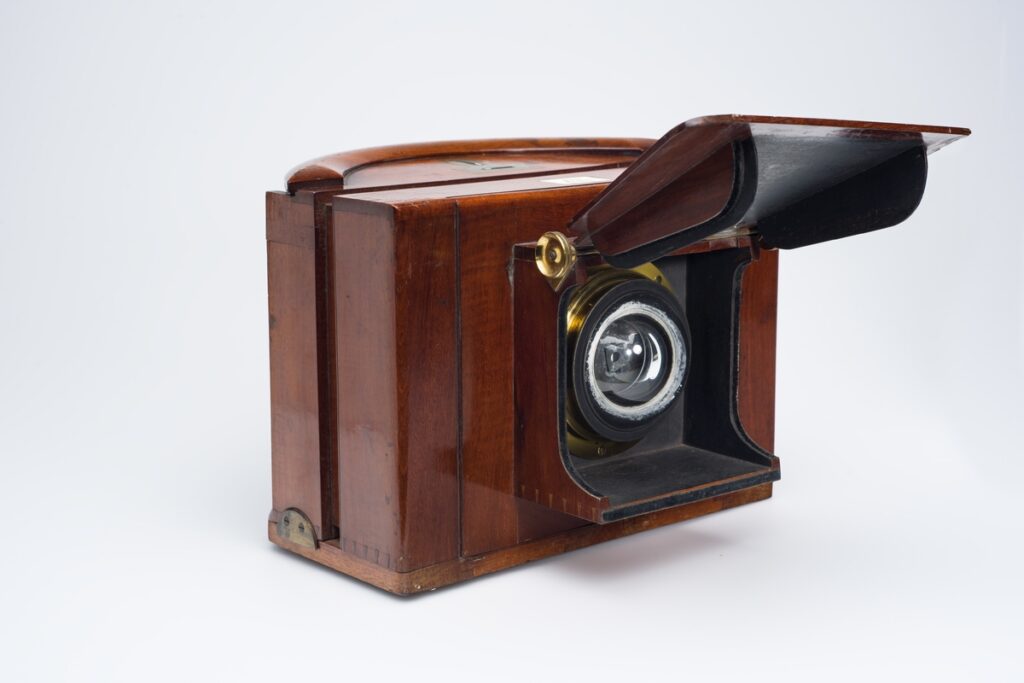
Thomas Sutton patented the first panoramic camera in 1859. It had a 76 mm lens protected by a hinged wooden flap. The curved wooden back was designed to take curved glass wet-plate negatives. Panoramic photographs were produced by the large curved plate coupled with the wide angled lens.
Sutton's achromatic panoramic lens fitted to this camera was the earliest panoramic wide-angle lens ever produced and patented by Sutton in September, 1859.
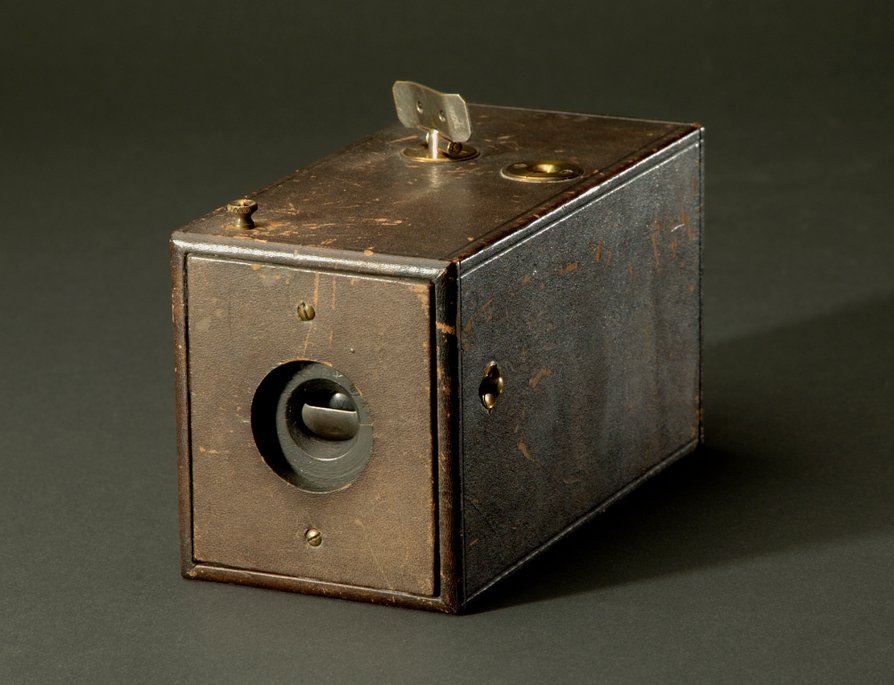
Photography didn't become widely available to the average person until about the mid-1880's, because of the invention of film rolls by George Eastman, who also created “Kodak” cameras, the first handheld camera and was offered for sale.
The Kodak camera was a simple box camera with a fixed-focus lens and single shutter speed. It was at a pretty low price, appealing to the average customer.
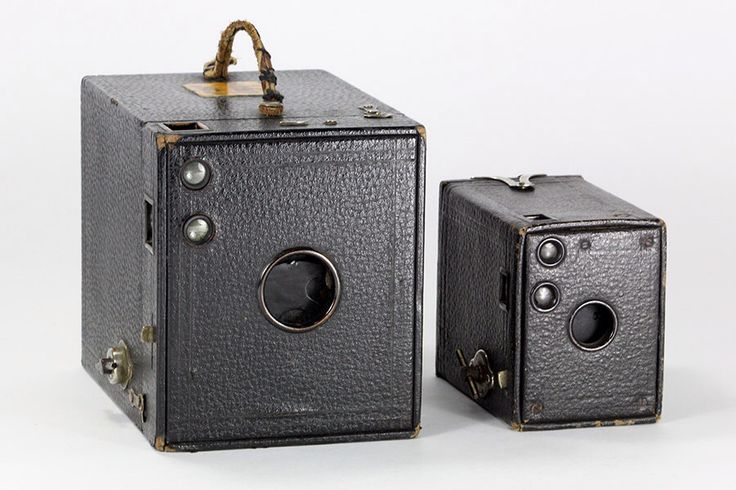
George Eastman also invented the “Brownie” Kodak camera. A tiny cardboard box camera with a meniscus lens, whose film could be taken out of the camera after shooting and developed at home.
The Brownie was an affordable and handy camera series designed to make photography popular for its snapshots. Released at an initial price of $1, these Brownie cameras democratized the act of photography with over 150,000 cameras shipped in the first year of production itself.
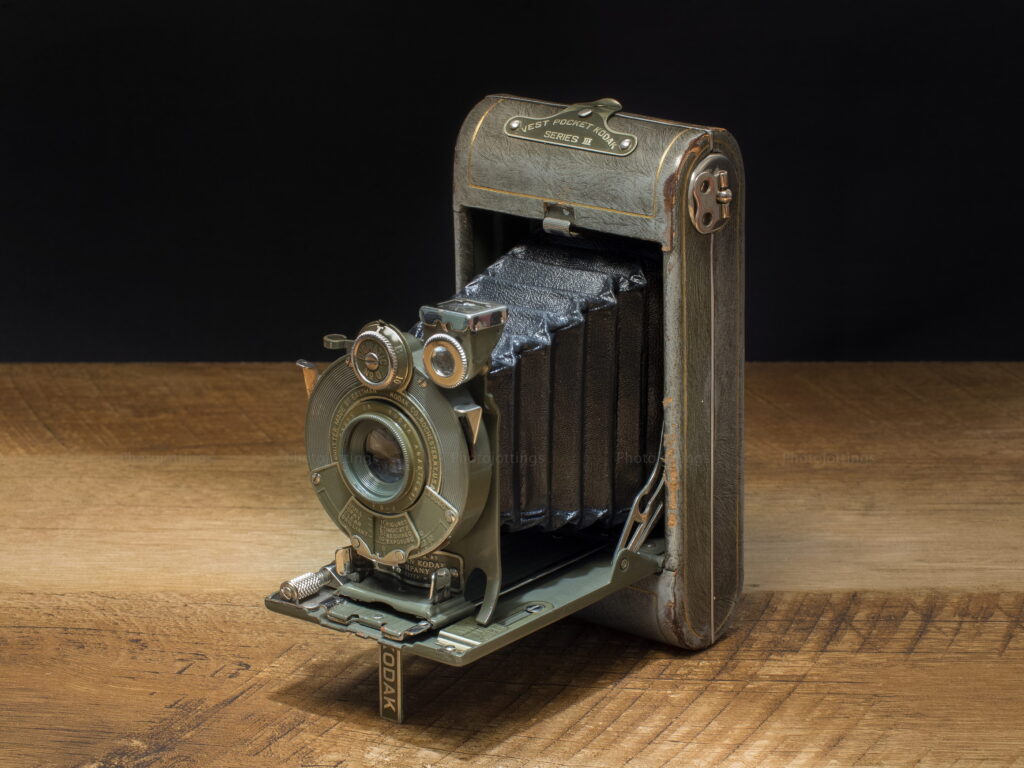
Advertised as the soldier's camera, the Vest Pocket Autographic Kodak, was a best seller during the First World War. It facilitated many unofficial images of the war –visual evidence that was often in marked contrast to the official reporting of events.
Soldiers of all nationalities took these cameras to war, with the aim of recording what they thought would be a great adventure. Few were prepared for what they were about to witness.
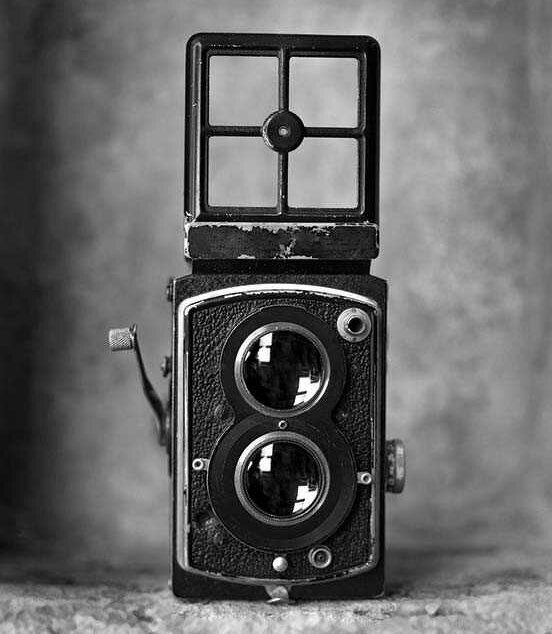
The creation of lens reflex cameras, which offered features such as camera lenses, pentaprism, variable shutter speeds, and removable lenses, marked a significant advancement in the camera. The first of these cameras were twin-lens reflex cameras (or TLRs for short), sold in the 1920s by the German company Franke & Heidecke. The first practical reflex camera was their Rolleiflex medium format TLR.
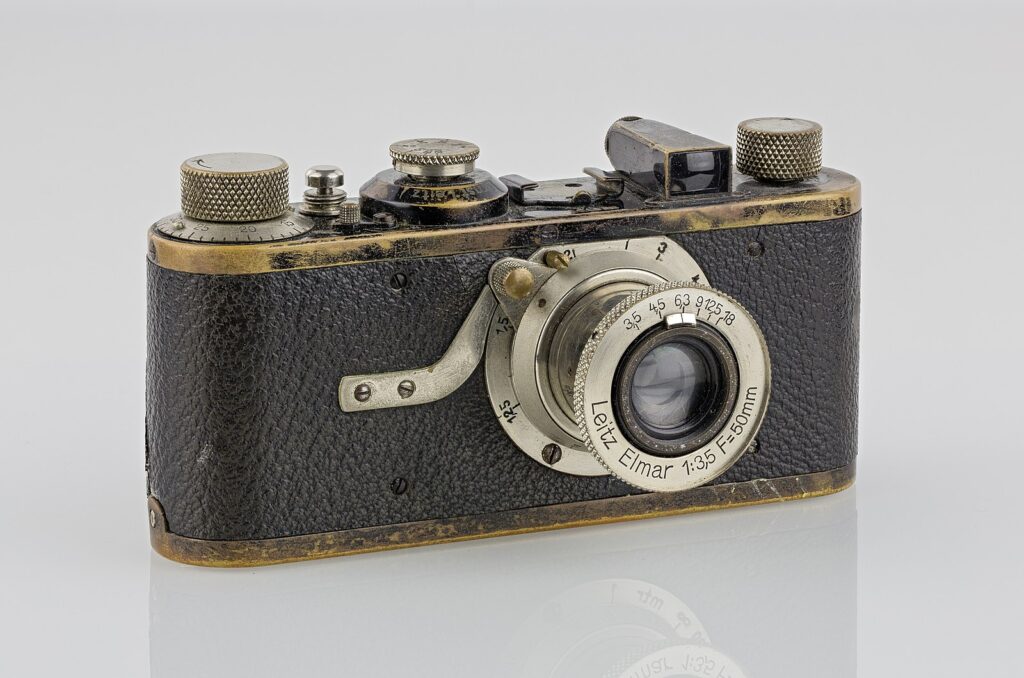
Camera manufacturers offered freestanding rolls of 35mm film that could be loaded into the camera. Oskar Barnack, a German scientist and photographer, is widely recognized for introducing 35mm film cameras, starting with the Leica, which he designed for the Leitz firm. The Leica I was the first commercially available Leica 35mm camera, and was an immediate success and popularized 35mm photography.
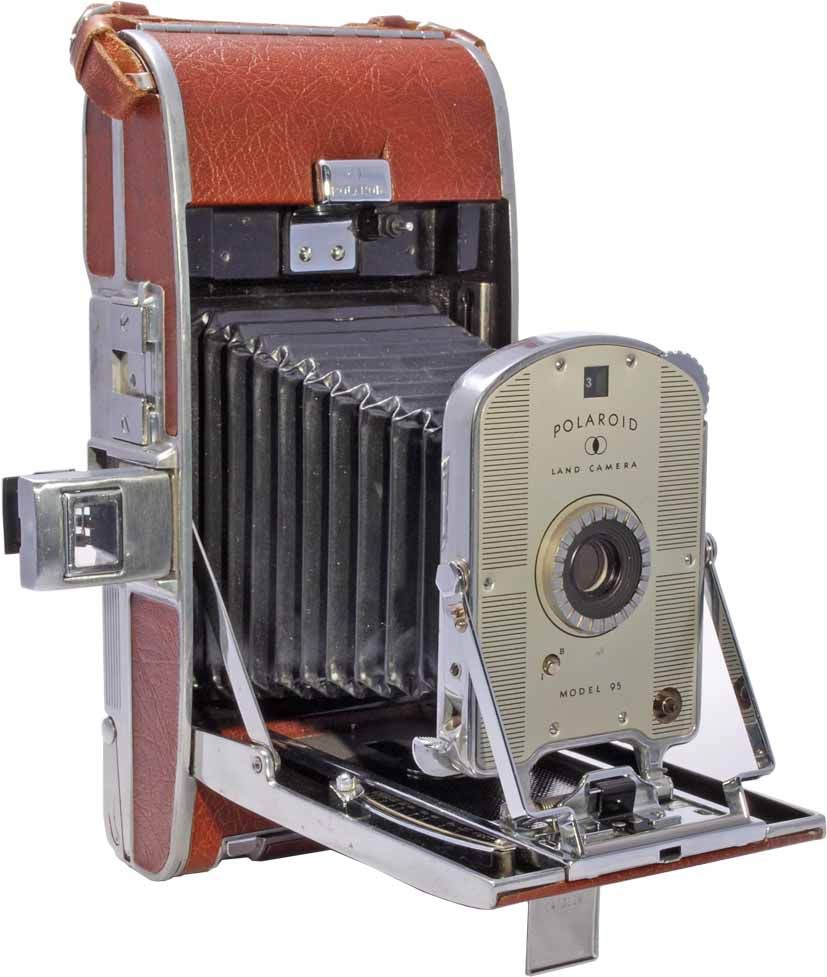
The process of developing photographs from negatives was a time-consuming job. A company called Polaroid recognized this and designed a camera that would compress the process into a few seconds. The result was instant photography that gave us a new evolution of cameras.
The Polaroid Model 95 (known as a "Land Camera" after its inventor Edwin Land) entered the market in 1947. It used a patented chemical process to create finished positive prints from the exposed negatives in under a minute.
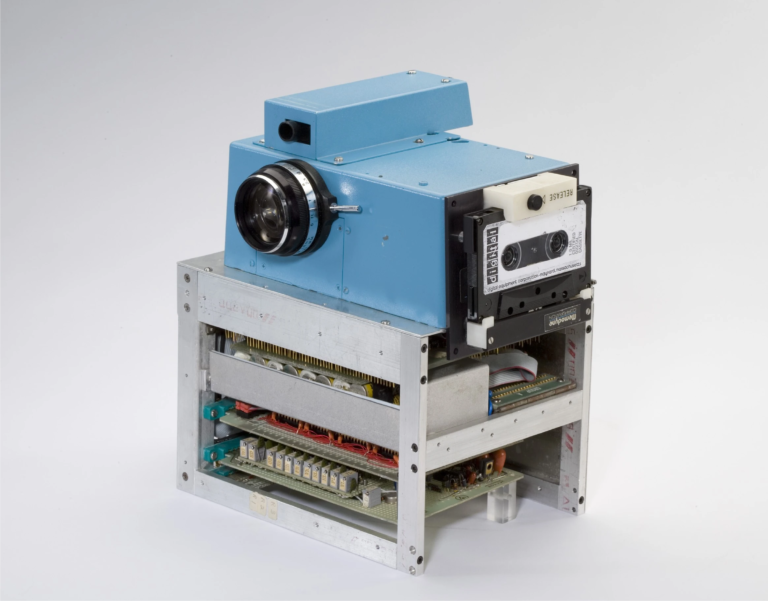
The first actual digital still camera was developed by Eastman Kodak engineer Steven Sasson. He built a prototype from a movie camera lens, a handful of Motorola parts, 16 batteries and some newly invented Fairchild CCD electronic sensors.
The resulting camera was the size of a printer and weighed nearly 4 kilograms. It captured black-and-white images on a digital cassette tape. As if all that wasn't enough, Sasson and his colleagues also had to invent a special screen so that they could look at them.
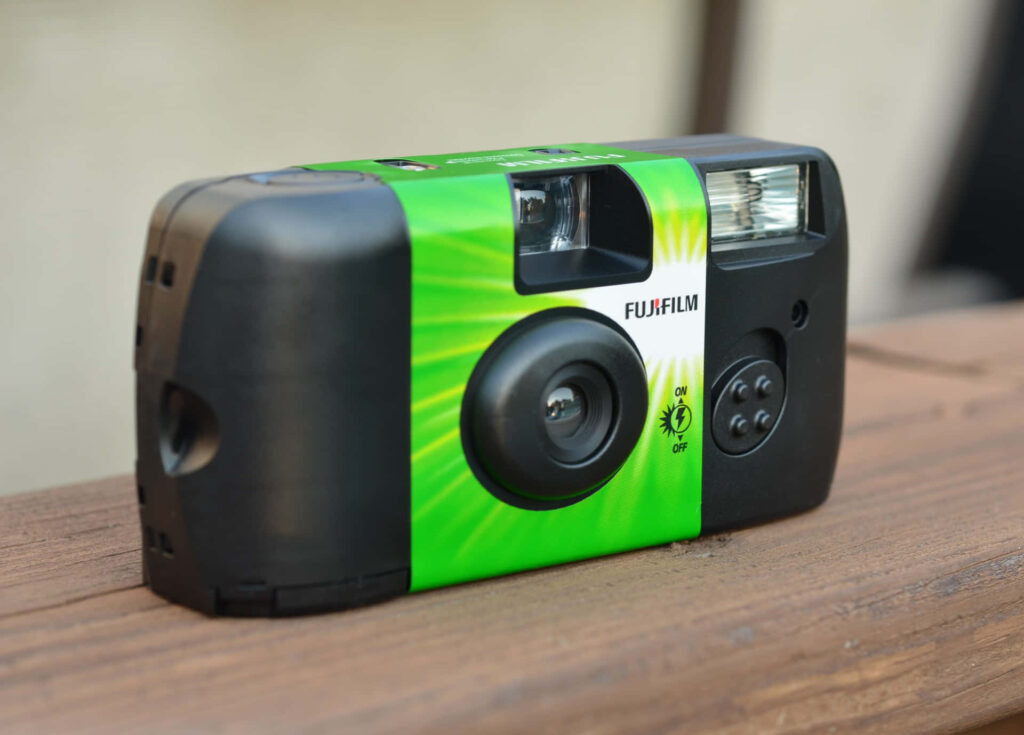
The currently familiar disposable camera was developed by Fujifilm in 1986. Their QuickSnap line, known in Japan as Utsurun-Desu ("It takes pictures"), used 35mm film.
It's a single-use camera and this particular model features a built-in flash for use in the daylight or at nighttime. It took 27 shots and was only $4. It's also one of the fastest offered in their disposable line-up of film cameras.